By Staff Writer | Hawaiʻi News Hoku
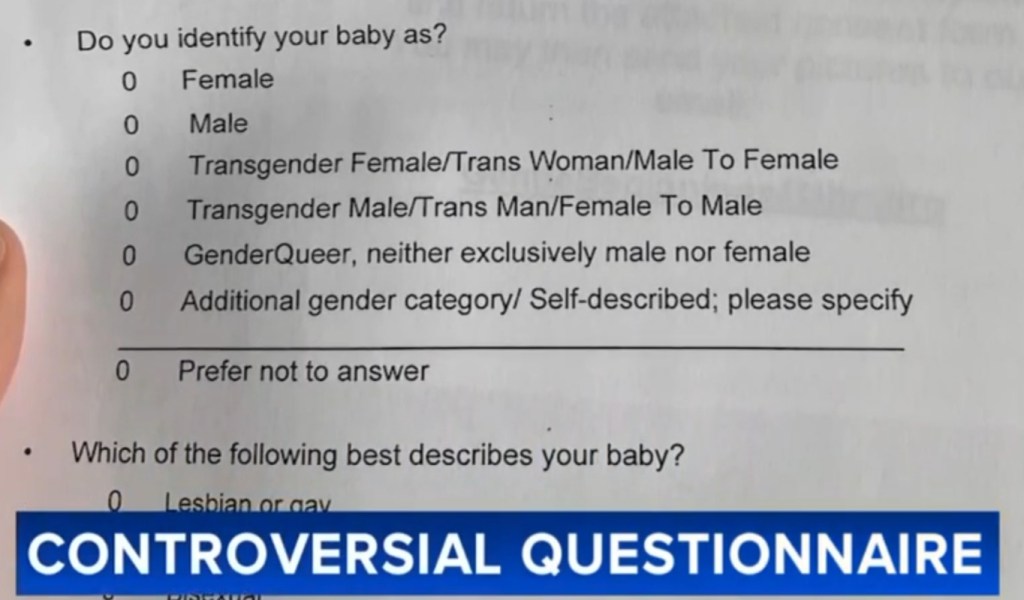
When the “baby orientation” questionnaire first popped up out of Vineland, New Jersey, it was instant internet fuel. The screenshot flew across social media faster than a North Shore set rolling in after a storm. Parents called it “crazy,” lawmakers called it “ludicrous,” and local aunties on Facebook were already shaking their heads saying, “Eh, what they doing on the mainland now?”
But take a breath. If we stop laughing for a second and look deeper, this form might be revealing something bigger about us. Maybe it was never about the babies at all. Maybe it was a mirror showing how parents, politicians, and society push their own beliefs—one way or another—onto the next generation.
—Outrage: The spark that revealed the tension
The first reaction was pure disbelief. New parents being asked if their newborn was straight, gay, bisexual, or gender queer sounded like something from a late-night comedy sketch. Folks felt it crossed the line between inclusion and absurdity. To many, it symbolized government stepping too far into the family circle.
But that anger told us something powerful. It showed just how much identity talk has become emotionally charged. Whether you’re in New Jersey or Nānākuli, people are wrestling with who gets to decide what identity even means—parents, institutions, or individuals. The outrage wasn’t random. It was a pressure gauge for our national nerves on culture and change.
—Opportunity: The mirror we didn’t expect
Here’s where the twist comes in. What if the question wasn’t meant to define the baby at all? What if it was meant to see how we react to it? Every “no way,” every “decline to answer,” and every eye-roll becomes data.Think about it like Bronfenbrenner’s ecological model. Our families, schools, and communities all influence how we see identity. Asking about a baby’s orientation might seem ridiculous, but it actually measures the social climate inside the home. Does the family lean traditional, neutral, or progressive? Are parents teaching their kids about labels or about love?
The answers to those questions say more about the parents than the baby. That information could help mental health researchers see how early family environments shape children’s emotional safety later in life.
—Seeing the systems beneath the storm
Psychologists know that the home environment is a key predictor of long-term mental health. When parents rigidly enforce gender roles, kids often internalize shame or fear of being different. When parents promote openness, even if they’re not sure what that means yet, kids tend to show higher emotional resilience.So in a strange way, that awkward New Jersey form might serve a hidden purpose. It shines a light on how strongly society—and especially parents—try to script identity before kids even get their first words out. That’s not about labeling babies. That’s about tracking how bias, faith, and culture shape the next generation’s confidence.
—From mainland madness to local lessons
Here in Hawaiʻi, the conversation lands differently. We’ve got our own deep cultural understanding of identity through concepts like māhū, which have existed for centuries without the shame that mainland politics often attaches. Hawaiʻi families tend to be more flexible—“Eh, that one just how they are, no problem.” But as Western influence keeps tightening around paperwork and policy, even local families can feel pressured to check a box before a child even learns to crawl.
The big takeaway is this: maybe the outrage that started on the mainland can become an opportunity for us to check in on our own systems. What messages are we passing on, intentionally or not, when we raise keiki in a world still arguing about who they’re allowed to be?
—The ultimate goal: Insight, not ideology
If done ethically, the real purpose behind collecting this kind of data is understanding—not control. It’s about seeing how parental worldviews shape kids’ well-being, not deciding who they’ll grow up to be. The more we understand the emotional environment we build around children, the better we can protect their mental health.
So yeah, the New Jersey form deserved some laughter and side-eye. But maybe it also gave us something valuable: a reminder that outrage can sometimes open the door to insight.Because if there’s one thing Hawaiʻi knows, it’s that storms can clear the air—and sometimes, even a mainland mistake can teach the islands a little about balance.
—References:
Bronfenbrenner, U. (1979). The Ecology of Human Development. Harvard University Press.Meyer, I. H. (2013).
Prejudice, Social Stress, and Mental Health in Lesbian, Gay, and Bisexual Populations.
American Psychological Association. (2022). Guidelines for Psychological Practice with Sexual Minority Persons.
Centers for Disease Control and Prevention. (2023). SOGI Data Frameworks and Health Equity Initiatives
US Birth Certificate Gender Marker Options (X / Non-binary)
This table lists jurisdictions with confirmed policy on allowing an X or non-binary marker on a birth certificate. Use the Key below for quick interpretation. Always verify with the jurisdiction’s vital records office before relying on this data.
| Jurisdiction | Allows “X” on Birth Certificate | Requirements / Notes | Last Checked |
|---|---|---|---|
| California | Yes | No medical documentation required in most cases. Amendment available by affidavit. | 2025 |
| Colorado | Yes | Self-attestation pathway available. Minors may have additional steps. | 2025 |
| Connecticut | Yes | “X” marker permitted by vital records amendment. Check local forms for specifics. | 2025 |
| Illinois | Yes | Affidavit of identity accepted. No medical proof required under recent changes. | 2025 |
| Maine | Yes | “X” option available through amendment. Verify with state registrar. | 2025 |
| Massachusetts | Yes | Reforms adopted to allow “X” on birth certificates and IDs. | 2025 |
| Michigan | Yes | “X” marker offered on state birth record amendment form. | 2025 |
| Nevada | Yes | “X” permitted without surgery requirement. Process is administrative. | 2025 |
| New Jersey | Yes | Male, female, or Undesignated/Non-binary under the Babs Siperstein Law. | 2025 |
| New Mexico | Yes | “X” available by amendment. Some forms may request a clinician signature. | 2025 |
| New York | Yes | “X” marker allowed via correction. Affidavit and notarization typically required. | 2025 |
| Oregon | Yes | Self-attestation model. “X” available since 2018. | 2025 |
| Rhode Island | Yes | “X” marker available on amended birth certificates. | 2025 |
| Vermont | Yes | “X” option permitted. Parents may request “X” for newborns in defined cases. | 2025 |
| Washington | Yes | Third-gender “X” allowed since 2018 via administrative process. | 2025 |
| District of Columbia | Yes | Male, female, or a third option available. Check DC Vital Records for forms. | 2025 |
| Puerto Rico | Yes | Supreme Court ruling allows “X” markers on birth certificates. | 2025 |
| Hawaiʻi | No | Amendment process permits male or female by physician affidavit. No “X” option listed. | 2025 |
| Florida | No | State officials have denied birth certificate gender-marker changes to “X.” | 2025 |
| Iowa | No | Recent law and policy changes remove gender identity protections and restrict changes. | 2025 |
| Kansas | No | Policy shifts following litigation ended changes to birth certificate gender markers. | 2025 |
| Maryland | No | Discussions ongoing, but statewide “X” on birth certificates not in effect. | 2025 |
| Minnesota | No | “X” offered on IDs, not on birth certificates statewide. | 2025 |
| North Dakota | No | Restricted pathway. Statutory language emphasizes binary designations. | 2025 |
| Oklahoma | No | Statute bans non-binary markers on birth certificates. | 2025 |
| Pennsylvania | No | No “X” option on state birth certificates. Check for future updates. | 2025 |
| Virginia | No | Birth records limited to male or female. “X” not offered on birth certificates. | 2025 |
Key
- Yes — Jurisdiction permits an “X” or non-binary marker on a birth certificate by amendment or at issuance.
- No — Jurisdiction limits birth certificates to male or female, or otherwise prohibits “X.”
- Requirements / Notes — Summary only. Processes differ for adults versus minors and may require affidavits, notarization, or other documentation.
This table shows only jurisdictions with confirmed information. Policies evolve. Verify with the state or territorial vital records office before acting.


Leave a comment