By Hawaiʻi News Hoku Staff Writer
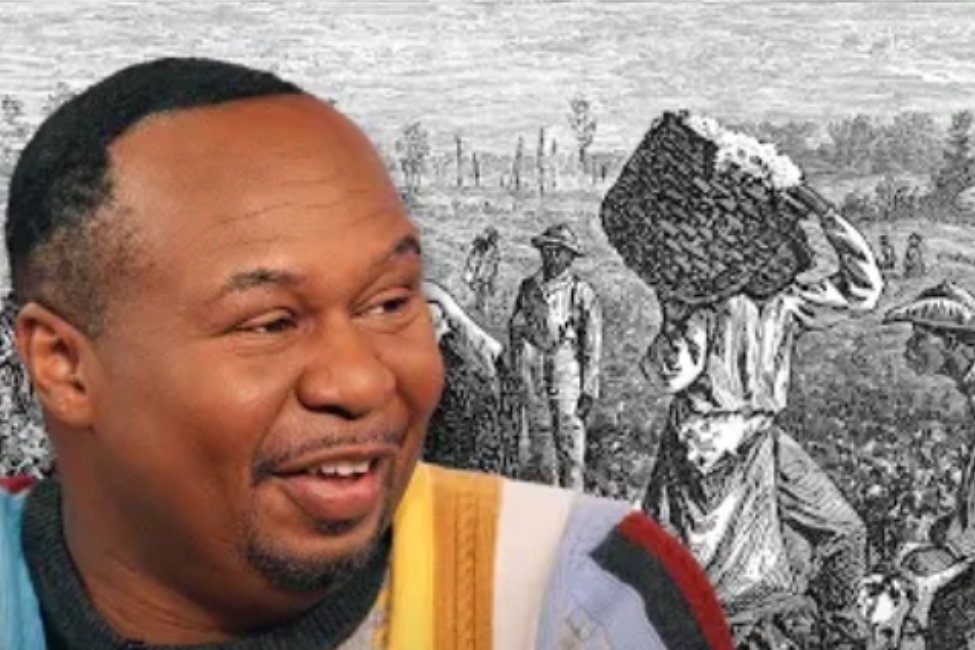
There’s edgy comedy, and then there’s whatever that guy on YouTube was doing. In a now-viral clip, a comedian proudly tells the crowd he “stalked” the descendants of the family who enslaved his ancestors. Yeah, stalked — like some kind of amateur detective with too much Wi-Fi and not enough therapy. He jokes about tracking them online, finding their address, and pulling up to their neighborhood, all while the audience laughs nervously.
Now, here in Hawaiʻi, people joke about all kinds of things. We tease cousins, talk stink, and roast each other at the beach until the poke runs out. But there’s a line between joking with people and obsessing over people. This guy’s routine wasn’t about comedy anymore — it was about payback dressed up as performance art. If somebody from Kailua did that, we’d say, “Eh, braddah, you okay or you need one chill pill and a surf session?”
The bigger problem is the audience cheering it on. Folks clapped like he was doing something brave. Brave? No, that’s not bravery. That’s emotional tourism — visiting trauma for clicks and applause. Imagine if one haole comic joked about stalking descendants of criminals who attacked his family. Social media would erupt faster than Mauna Loa on a windy day.
Comedy used to be about timing, wit, and self-awareness. Now it’s about who can weaponize their pain the loudest. The comedian says he was confronting history. Maybe so. But history doesn’t heal by haunting people who had nothing to do with it. Out here, we talk about kuleana — taking responsibility, not transferring blame. If we all start digging through family trees to find someone to punish, nobody’s going have time to plant new ones.
There’s enough tension in this country without comedians turning therapy sessions into public hunts. Everyone’s tired of the “woke” guilt Olympics. Maybe it’s time to bring back the kind of humor that unites the room instead of dividing it. In Hawaiʻi, we’ve learned to laugh together, not at each other. Maybe the mainland could learn that too — before somebody turns open mic night into an open investigation.
Public Reaction:
Mainland Frustration Boils Over
If you want to see what people really think, you don’t need CNN or Fox — just scroll the YouTube comments. The reaction to the comedian’s “stalking” story is a raw snapshot of how divided the country’s become over race, humor, and history.
Many commenters didn’t buy his victim narrative. One viewer wrote, “I’d be more angry at the blacks that captured and sold his ancestors, not the farmers that bought them,” echoing a common theme that blame for slavery’s origins isn’t as one-sided as often told. Another said, “How you famous and got money and you gon still claim you oppressed?” — a jab that resonated with viewers tired of celebrities playing martyr.
Some took the historical route. A user noted, “My ancestors were Slavs — the word slave comes from us. Should I go yell at the Ottomans?” Another commenter added, “Untangling history is impossible. Everyone’s ancestors were conquered by someone.”
Others aimed directly at the comedian’s logic: “So hundreds of thousands of white men died trying to free his dumbass, but he wants to track down an innocent family? This sorry person has no shame.” A few even called it dangerous, warning, “I hope that family gets a restraining order.”
But beneath the mockery, there’s a deeper exhaustion. One commenter summed it up bluntly: “Frankly I’m sick of this ‘historical guilt’ being thrown at us. None of us were there.” Another joked darkly, “He needs to track down who sold his hairline.”
Taken together, the reaction feels like a social whiplash — ordinary Americans pushing back against an endless cycle of grievance and blame. The thread reads less like a comedy audience and more like a cultural intervention.
As one local might say, “Eh, you like talk about ancestors? Okay, but no go chase people’s grandkids, braddah. That’s just weird.”
Online Viewers Fire Back
If the comedian hoped for applause, the internet gave him something else — a history lesson with bite. Thousands of viewers across YouTube piled on, not with sympathy, but with sarcasm, humor, and sharp reminders that the past can’t be repaid like a parking ticket.
One of the most-liked comments put it bluntly: “You were never a slave. I was never a slave owner. I owe you nothing.” Another added, “White people didn’t invent slavery — but we did end it.”
A top reply mocked the entire idea of hunting down “the guilty,” writing, “I don’t have the foggiest idea how he’s going to track down the tribe that sold him to another tribe who sold him to a coastal trader who sold him to a boat captain… good luck.” Others piled on the absurdity: “Which descendant does he even go after? The original family probably has thousands by now.”
Some pushed the logic further: “By that same logic, if someone in his family committed a crime, should he be punished too?” Another added, “Fine — pay him 200 bucks and call it even. That was probably the original price.”
Commenters with historical flair reminded others that slavery was a universal human horror. One wrote, “My ancestors were enslaved by Romans, Moors, and Vikings. Should I start a GoFundMe against Scandinavia?” Another said, “Blaming someone for what their ancestors did is insanity — multi-generational guilt is cancer.”
Some tied it to modern frustration over endless grievance politics: “People are tired of being told they’re responsible for history they never lived. Reparations talk in California proves how detached the elite are from reality.”
Even the humor turned local at points. One Hawaiian viewer joked, “Bruh, out here if you still mad about 1778, you’d never have time to surf.”
It’s harsh, but it shows something important: regular people aren’t buying the narrative anymore. They’re tired of guilt politics disguised as justice, of comedians chasing clout through victimhood. The public mood isn’t about hate — it’s about fatigue.
Out here, we’d say, “History rough for all of us, but if you still mad 400 years later, maybe the joke’s on you.”
Personal Reflection: Shared Roots, Shared Responsibility
As someone of Slovenian heritage, I couldn’t help but pause when I saw one commenter write, “My ancestors were Slavs — the word slave comes from us.” That hit home. My own family traces back to Slovenia, part of that same Slavic lineage that endured centuries of invasions, occupations, and forced labor.
But here’s the difference — I don’t wear that history like a chip on my shoulder. I wear it like armor. I’m an American-Slovenian, not the other way around, because this country gave my family the freedom those old empires never did. Being second-generation means remembering where you came from, but being American first means choosing not to be trapped there.
The irony is, if you trace history long enough, everyone’s family got conquered, sold, or oppressed by somebody. That’s the shared human condition — not a scoreboard of suffering, but proof of resilience. Out here in Hawaiʻi, where everyone’s part of a cultural mix, that truth rings loud. We all carry stories of hardship, but we also share the blessing of living in a place that lets us move forward together.
So when I see comedians chasing ghosts instead of gratitude, I remember what my own grandparents taught: “Son, don’t chase the past — build something that lasts.”
Source: YouTube – “Unhinged Comedian Admits To Stalking The Family Who Enslaved His Ancestors”© Hawaiʻi News Hoku, 2025 – Local. Honest. No Spin.




Leave a comment